Garden renovation with lawn and smart irrigation in Numansdorp
Adding soil and establishing levels
Coordinating tiles and lawn
Underground irrigation in two zones
Laying the turf
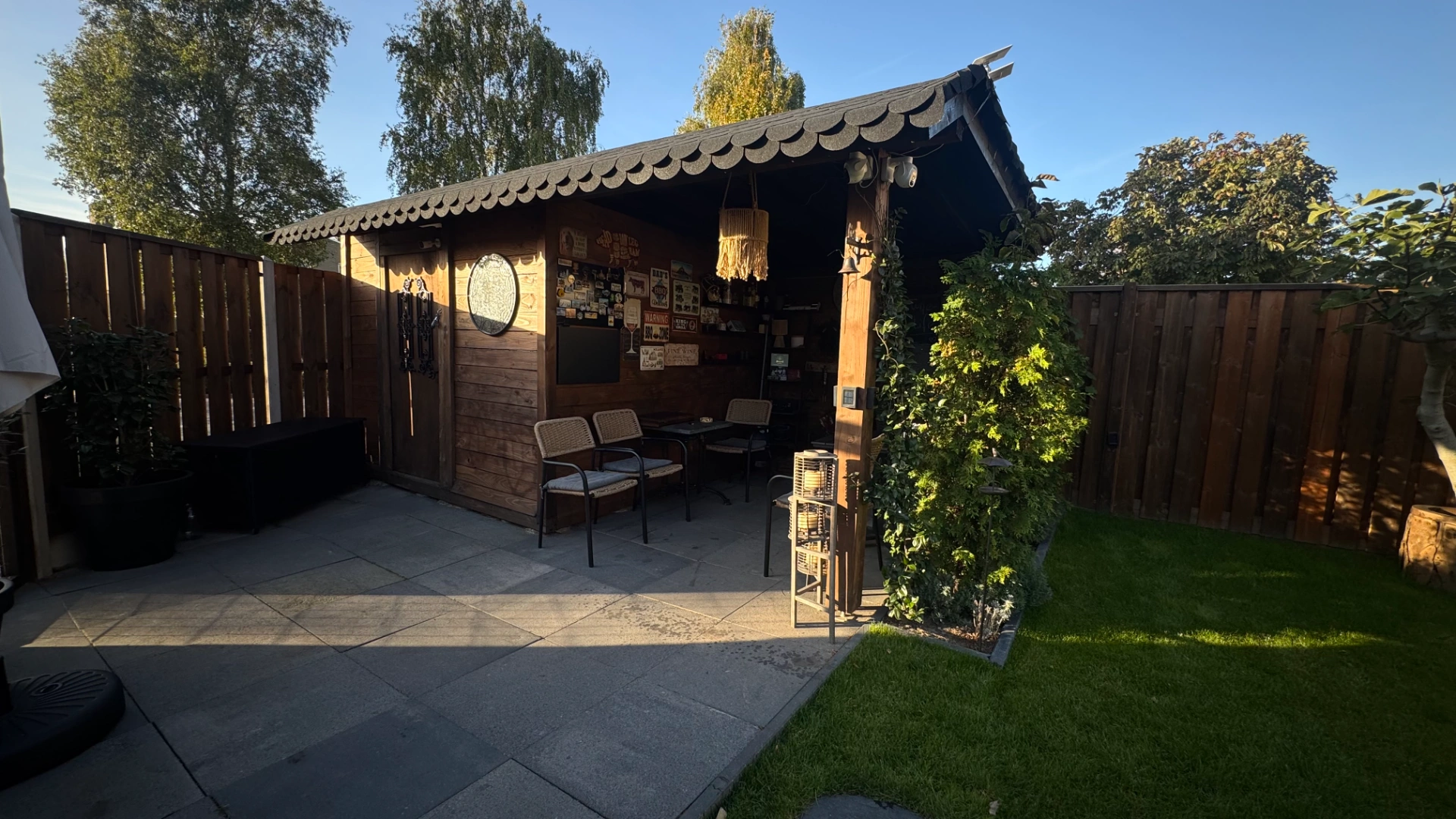
Tiling, a new lawn laid with turf and an underground Gardena irrigation system divided into two zones. The garden was developed from ground preparation through to phone-controlled watering.
36HWR / PROJECT
Project timeline
May 2026
Before & after
BeforeAfter
Garden renovation with lawn and smart irrigation in Numansdorp
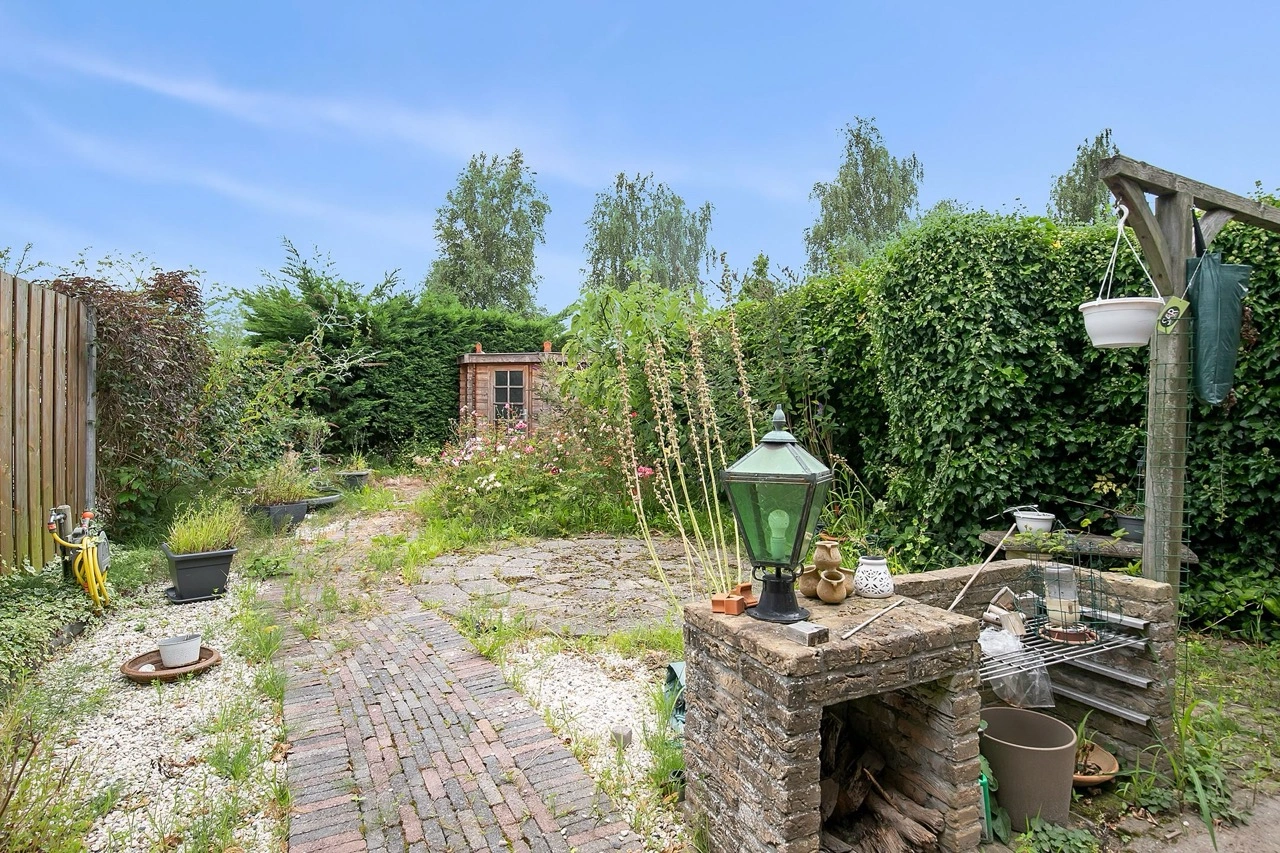
A good lawn starts with the right ground preparation and level. In this garden, the tiling, soil build-up and irrigation needed to work together. We addressed the levels and hidden components before laying the turf.
02 / Step by step
The project in phases
Phase 1
Adding soil and establishing levels
We added up to approximately 8 m³ of soil to establish the required level for the finished lawn. The soil was spread, firmed and levelled. A specialist black membrane also formed part of the garden preparation.
The lawn’s final height began with the ground beneath it. Up to approximately eight cubic metres of additional soil were spread and firmed to reach the intended level. Black membrane was also included in the garden preparation.
This matters because the visible turf is only a thin upper layer. The ground preparation determines the overall shape and how the lawn meets the tiled areas.
Why this matters
An even, prepared base helps limit uneven levels and later settlement in the lawn.
Phase 2
Coordinating tiles and lawn
The tiled areas and new lawn formed the visible garden layout. Their adjoining levels were considered during ground preparation so the paved and planted surfaces work together.
The project combined hard surfaces for garden use with a green lawn, rather than treating the tiling and grass as unrelated jobs. Their boundary levels needed to be considered before the final surfaces were installed.
The resulting layout brings movement through the garden and planted space together. The irrigation was then integrated with the lawn part of that arrangement.
Why this matters
The transition between tiles and grass contributes to a neat, usable garden.
Phase 3
Underground irrigation in two zones
We installed a Gardena irrigation system and divided the lawn into two separate zones. The sprinkler heads sit below ground level, rise when watering starts and retract when it stops, keeping most of the equipment out of sight.
Dividing the irrigation into two zones allows the garden sections to be watered in sequence. Each zone has its own place in the programme, so the system does not simply run every sprinkler at once. The buried routes and pop-up heads keep the permanent equipment largely out of view.
When watering starts, pressure raises the heads above the lawn. When it stops, they retract into the ground. This allows the grass to remain the dominant visible surface.
Why this matters
Separate zones allow watering to be controlled for each part of the garden.
Phase 4
Laying the turf
We laid ready-grown turf on the prepared soil, giving the garden an immediate green surface. The new lawn meets the tiled areas and integrates with the irrigation installed beneath it.
Ready-grown turf created a green surface immediately, but the roots still need to establish in the prepared soil. The irrigation and the client’s ability to adjust watering support that changing need as the new lawn settles in.
Laying the turf was therefore the visible finishing phase of earlier work: soil levels, the tiled boundaries and the irrigation routes had already shaped the garden underneath.
Why this matters
Turf provides an immediate result, while still depending on good ground preparation and suitable watering as it establishes.
Phase 5
Smart controls and soil-moisture sensing
The system connects through a Gardena hub. Using the phone app, the client can adjust the watering sequence and settings. A sensor in the lawn measures soil moisture. The controls combine that information with the configured schedule and weather information, including expected rain and sunrise and sunset times.
The Gardena hub connects the installation with app control, allowing the client to manage the watering sequence from a phone. The lawn sensor adds information about moisture in the soil, so the control is informed by more than a clock setting alone.
Weather information and the configured programme help the system respond to changing conditions. The client retains control of the settings; the system supports that management rather than making the garden maintenance-free.
Why this matters
Soil moisture and weather information help match watering to conditions rather than relying only on a fixed timer.
Phase 6
Watering at sunrise
The baseline programme starts at sunrise and waters the two zones in sequence for ten minutes each. Moisture sensing and smart control help avoid unnecessary watering. The client can view and adjust the schedule in the app as the garden’s needs change.
The ten-minute programme applies to each zone in turn, giving a clear starting schedule around sunrise. It is a baseline chosen for this installation, not a fixed watering requirement for every season or every lawn.
As rainfall, temperatures and root development change, the app and moisture information allow the settings to be reviewed. The May 2026 project combined garden construction with that practical ongoing control.
Why this matters
The ten-minute setting belongs to this project; the app allows the duration and schedule to be adjusted later.
THIS PROJECT / THEIR EXPERIENCE
What the client says
Reviews appear here when the client chooses to link their experience to this project.